Keeping Your Dog's Playtime Safe on Wet Surfaces
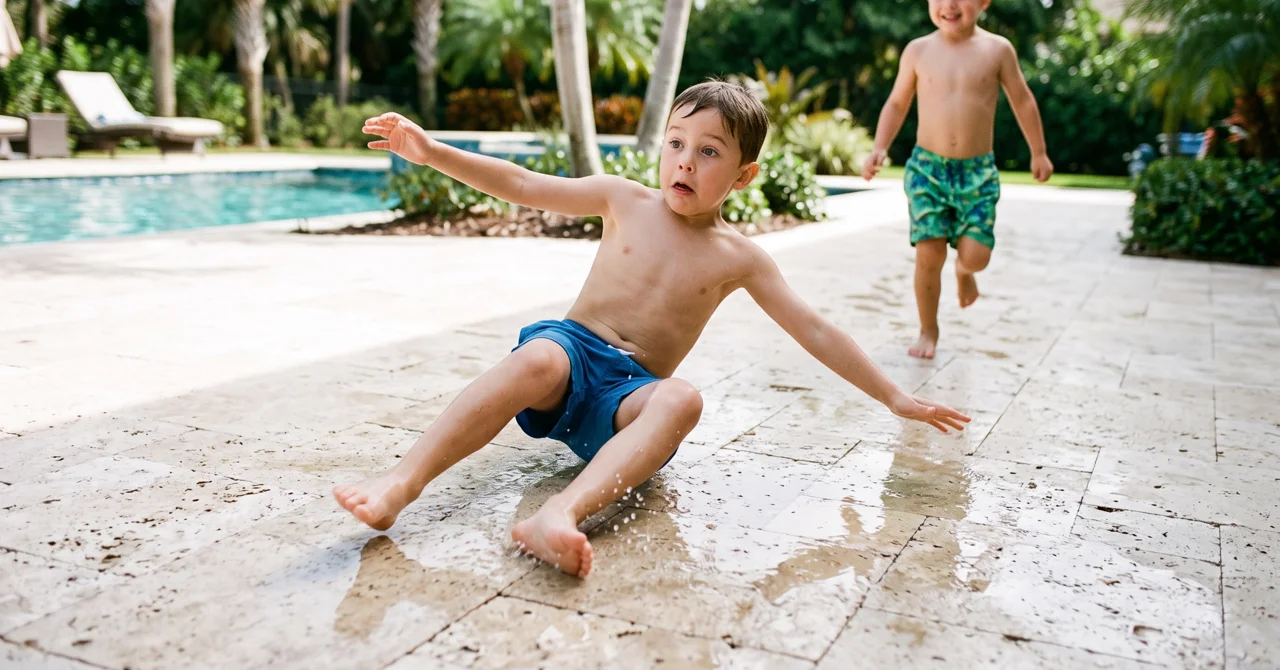
Dogs love to run, especially on a cool, wet pool deck. But a slippery surface can lead to painful falls, costly vet bills, and lasting injuries. We make sure their playtime is safe time.
The Risk
The Sprint-Stop Is the Injury
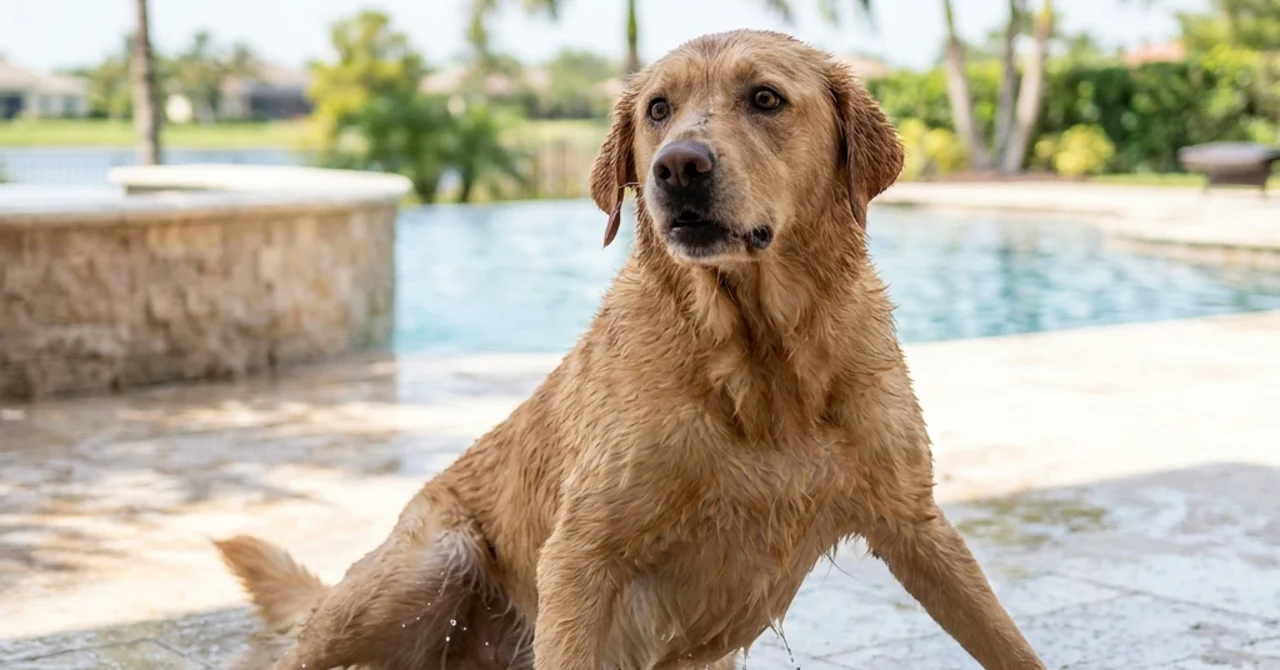
Dogs plant their weight and change direction differently than people do. A hard sprint-stop, a sudden turn to chase a ball, or a skid on wet, polished travertine or a sealed paver deck can send a rear paw sliding out from under a dog mid-stride — and that's exactly the motion that tears a cranial cruciate ligament (the canine equivalent of an ACL).
It's one of the most common orthopedic injuries vets treat, and large or active breeds — the dogs most likely to be sprinting around a pool deck in the first place — carry the highest risk.
The Cost
What a Torn Ligament Actually Costs
A single CCL tear typically runs $2,000 to $4,000 in surgery alone, with the full range stretching from $1,500 to $7,000+ depending on your dog's size, the clinic, and whether both legs are affected — which happens often, since a dog favoring one leg puts extra strain on the other.
Add physical therapy and the total climbs further. And unlike a vet bill, the recovery — weeks of crate rest for a dog that just wants to run — isn't something you can pay your way out of faster.
Is it worth it? A slip that costs nothing to prevent can cost thousands to fix, plus two months of a dog that can't be a dog. That math is what SIGNATRAC is engineered around.
The Engineering
How SIGNATRAC Helps
Slip resistance is measured, not guessed. The industry standard is called DCOF — dynamic coefficient of friction — a number that tells you how much grip a surface holds when it's wet. The lower the number, the easier it is for a foot to slide out from under someone.
Building codes set a minimum wet-grip requirement for pool decks, coping and ramps — and most sealed stone sits well under it once it's wet. SIGNATRAC engineers traction into the stone itself rather than laying a topical film over it, and every job is calibrated on site for that surface and that household — kids, dogs, older parents, guests.
- Grip is engineered into the stone itself — not a coating that wears off under paw traffic.
- Works the same wet or dry, so a dog fresh out of the pool gets the same traction as a dry deck.
- No chemical residue or texture change that would make a dog avoid the surface.