Non-Slip Pool Decks for Kids Who Don't Slow Down
Pool decks are for fun, not fear. A child's fall on a hard, slippery surface can turn a day of joy into an emergency room visit. Our non-slip systems give you peace of mind.
The Risk
Parents Watch the Water. The Deck Is Where It Happens.
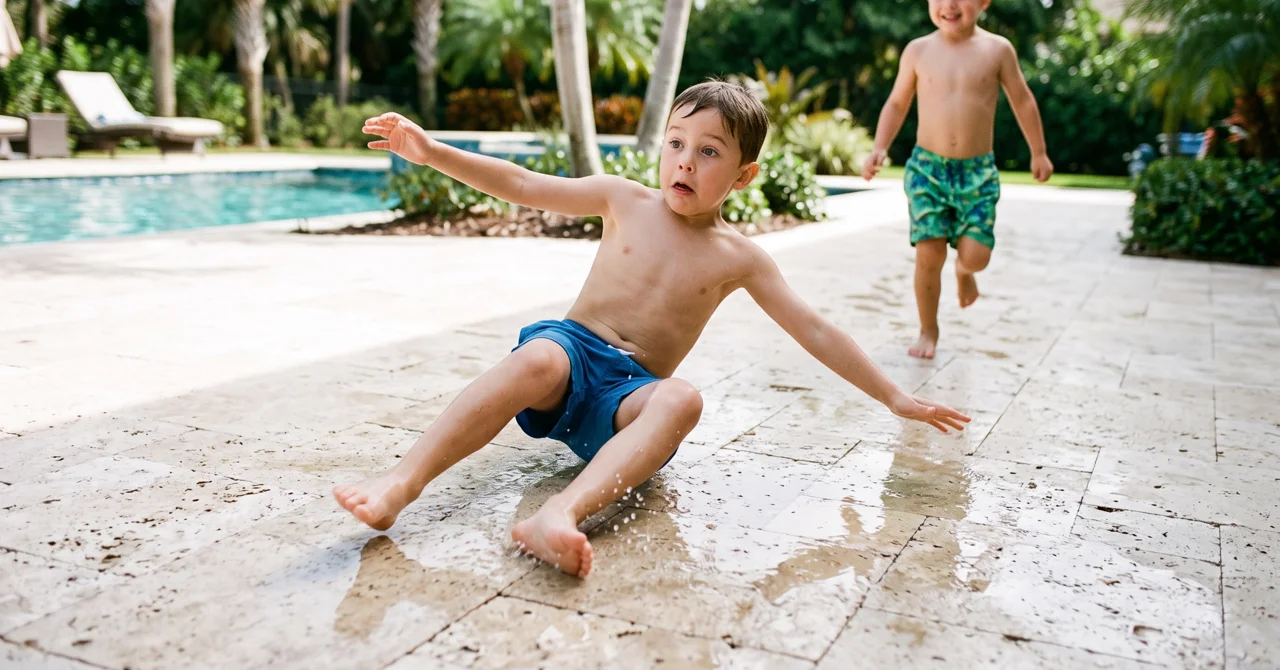
Most pool safety attention goes to what's happening in the water — but nearly half of pool-related injuries happen on the surrounding deck, not in the pool itself. Kids ages 1 to 4 are at the highest risk, and they're exactly the age group with the least developed balance and reaction time.
A hard sprint across a wet, polished surface doesn't require a dramatic accident — it just requires a kid being a kid. No amount of reminding them to "walk, don't run" survives the moment they forget, mid-game, with a friend three steps ahead of them.
The Cost
What a Trip to the ER Actually Costs
The average ER visit in Florida runs about $3,102 — among the highest in the country. A straightforward broken arm, once you add the ER admission fee, X-rays, and a cast, typically lands between $1,500 and $5,000. If it needs surgery, that number can climb past $10,000.
That's before accounting for the day itself — the swim lesson or pool day that turns into a waiting room, and a kid in a cast for the rest of the summer.
Is it worth it? A single ER visit costs more than most non-slip deck treatments — and that's before anyone asks whether it was worth the risk to begin with.
The Engineering
How SIGNATRAC Helps
Slip resistance is measured, not guessed. The industry standard is called DCOF — dynamic coefficient of friction — a number that tells you how much grip a surface holds when it's wet. The lower the number, the easier it is for a foot to slide out from under someone.
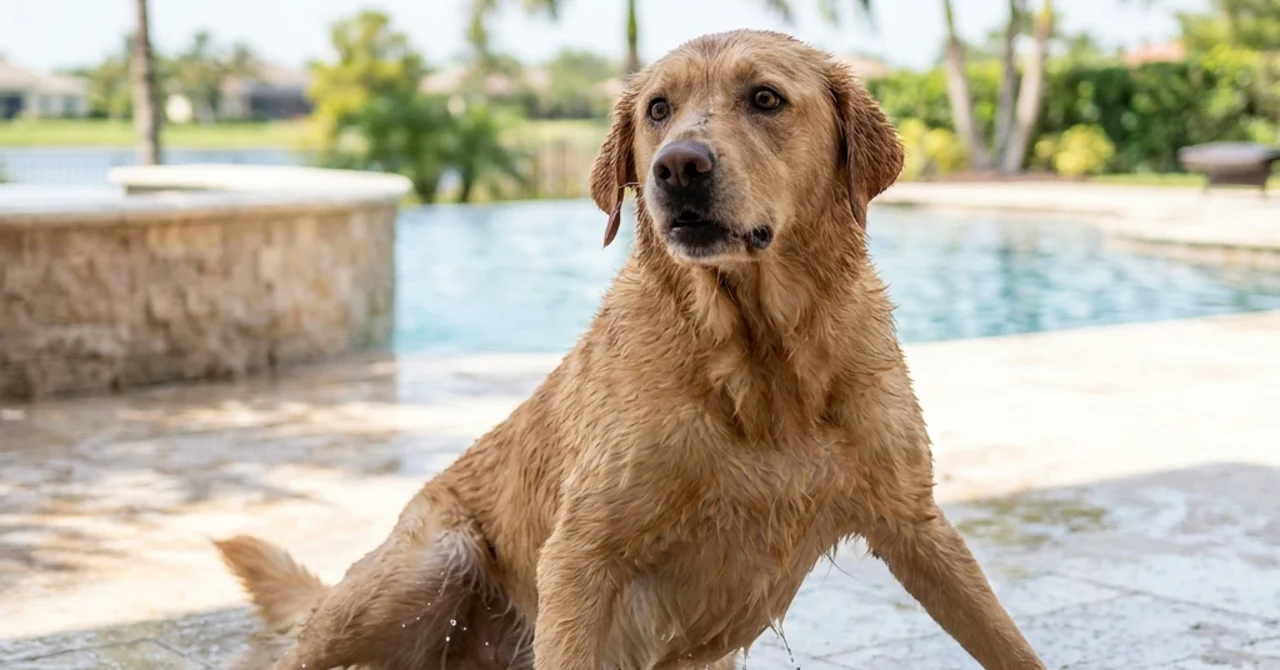
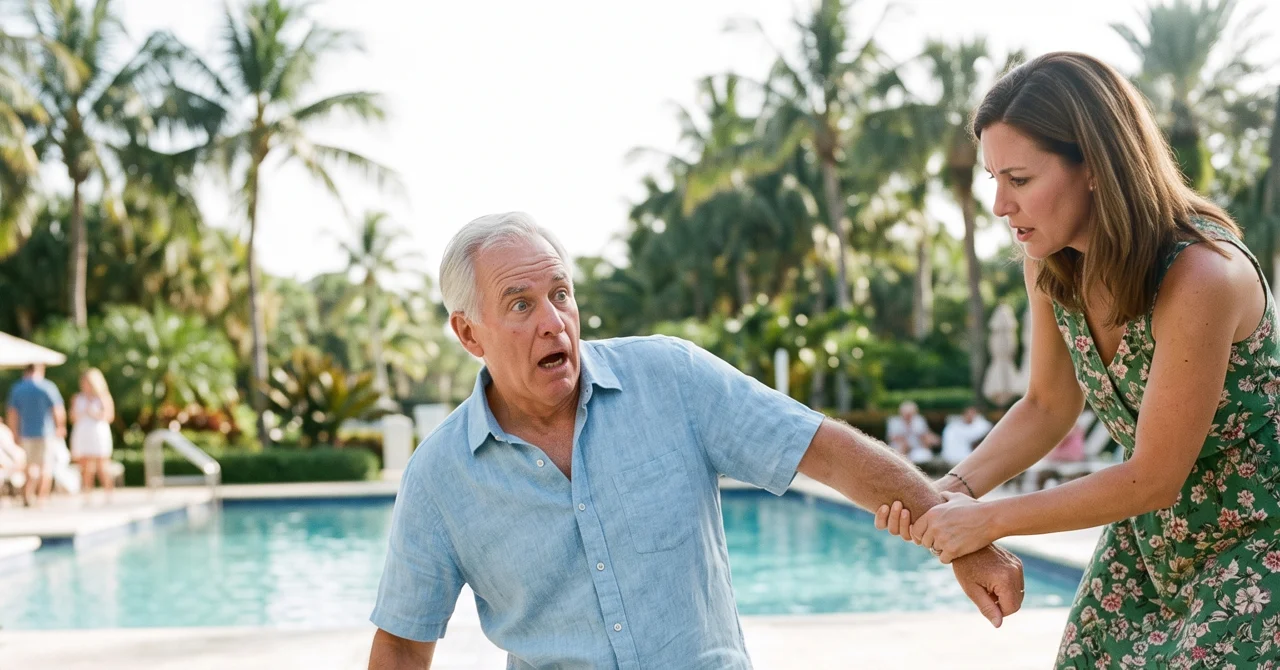
Building codes set a minimum wet-grip requirement for pool decks, coping and ramps — and most sealed stone sits well under it once it's wet. SIGNATRAC engineers traction into the stone itself rather than laying a topical film over it, and every job is calibrated on site for that surface and that household — kids, dogs, older parents, guests.
- Coefficient of friction calibrated for bare feet, wet or dry.
- The traction lives in the stone — it doesn't depend on a child remembering the rules.
- No visible texture change or color shift. The surface still looks and feels like the one you chose.