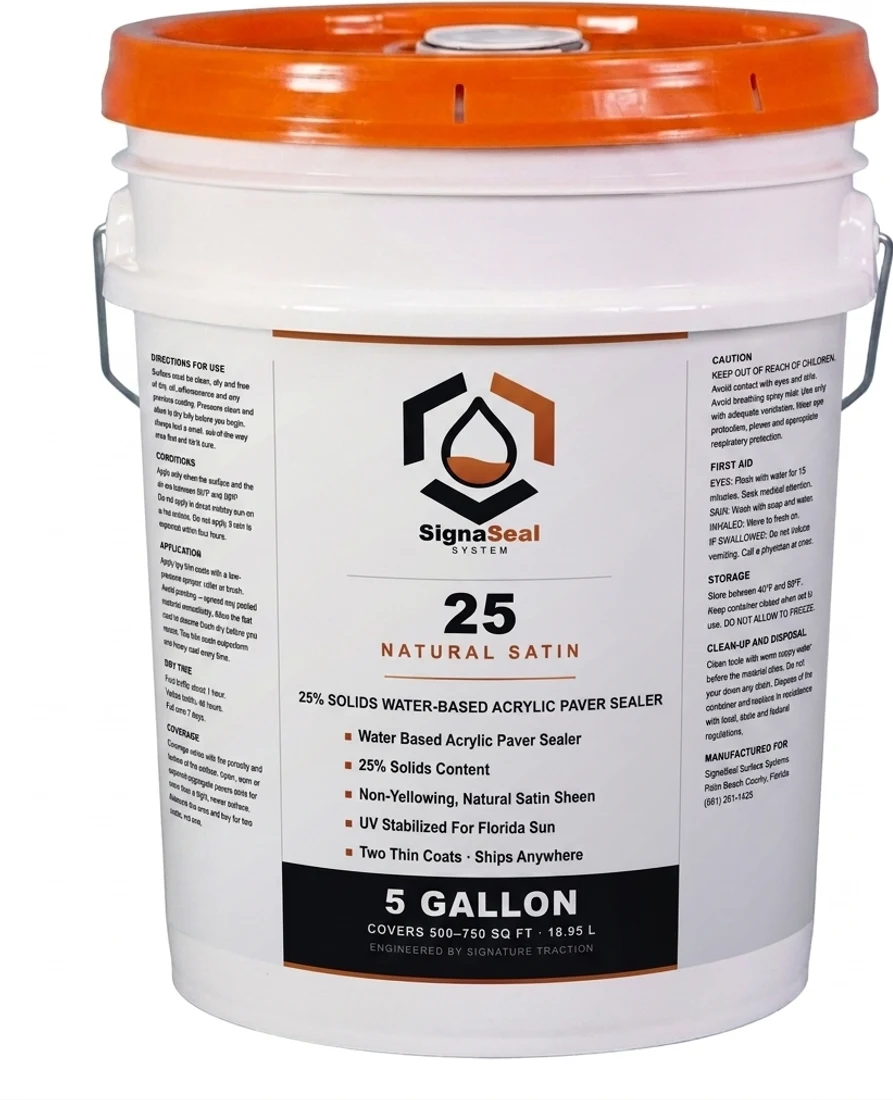
Twenty-five percent solids — most of the shelf ships at fifteen. But the real secret isn't one pail, it's the order you put them down in: DEEP soaks in and protects the paver from within, then 25 goes over the top for the colour and the wear layer. Two steps, both water-based, both ship to your door.
No card. No charge today. You're holding a place in the first run — walk away any time before it ships.
"Solids" is the part that stays on your driveway after the water evaporates — the actual sealer. Most water-based paver sealers run 15–18% solids. Which means 82–85% of what you just bought and sprayed goes into the air.
A thicker, tougher film with more material to wear through. In Florida exposure testing, 25% products held colour and sheen through two rainy seasons while 15–18% products lost their sheen by month six.
Two different defences. The UV absorber soaks up ultraviolet before it reaches the film — sunscreen inside the sealer. The light stabiliser protects from the inside by interrupting the reaction that breaks the film apart. Florida sun is the enemy; this is the answer.
Natural gives a rich satin sheen that reads like stone rather than a coating — and being water-based, it ships anywhere. Wet gives the high-gloss, just-rained-on look and locks joint sand, but it's solvent-based, so it's local pickup or freight only. Same 25% solids either way.
UV-stable acrylic resin. The cheap stuff ambers in Florida sun and turns a red driveway orange within a couple of seasons. This doesn't.
Every failed driveway we've ever been called out to fix had one thing in common: somebody put a single coat of something shiny on top and hoped. Protection happens inside the paver. Looks happen on top. You need both, and they are not the same product.
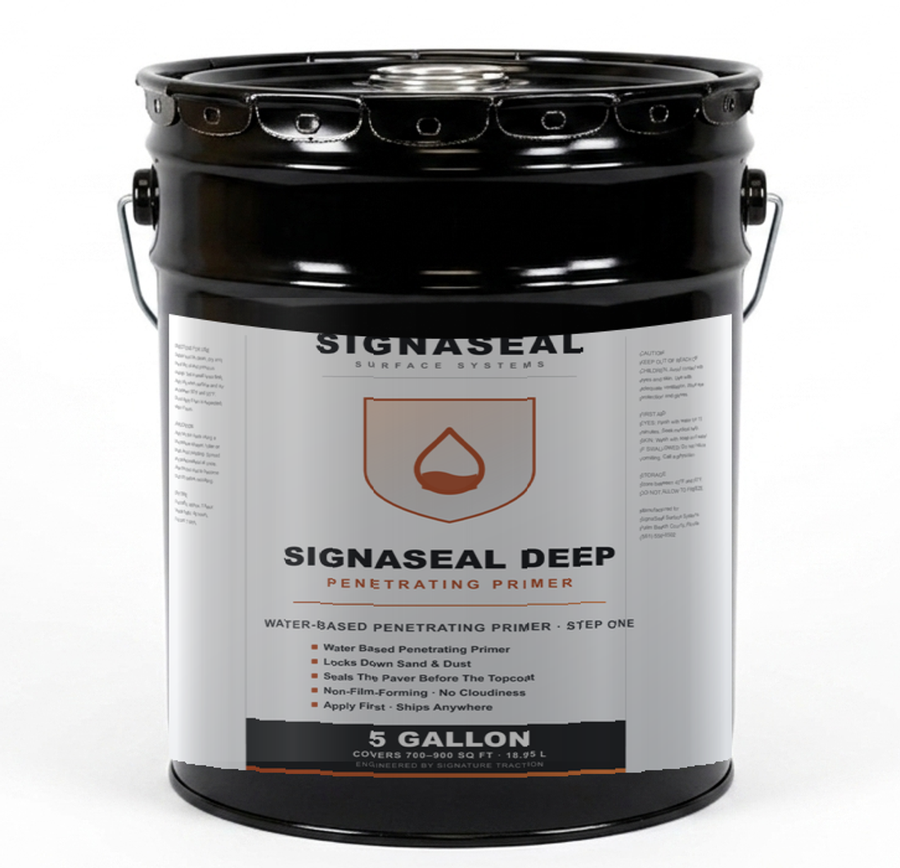
Step One
A penetrating primer, not a coating. Silane and siloxane molecules are small enough to travel down into the pore structure and bond in there — no film on the surface, nothing that can peel. It waterproofs the paver from the inside and gives the topcoat something stable to sit on.
Water-based. Ships anywhere. One flood coat, roughly 750–1,000 sq ft per pail.
Step Two
The 25% solids topcoat. This is where the colour comes back and the wear layer lives. Satin sheen — it reads like richer stone rather than something poured on top. Most of the shelf ships at 15–18% solids; this is the reason yours outlasts theirs.
Water-based. Ships anywhere. Two thin coats, roughly 500–750 sq ft per pail.
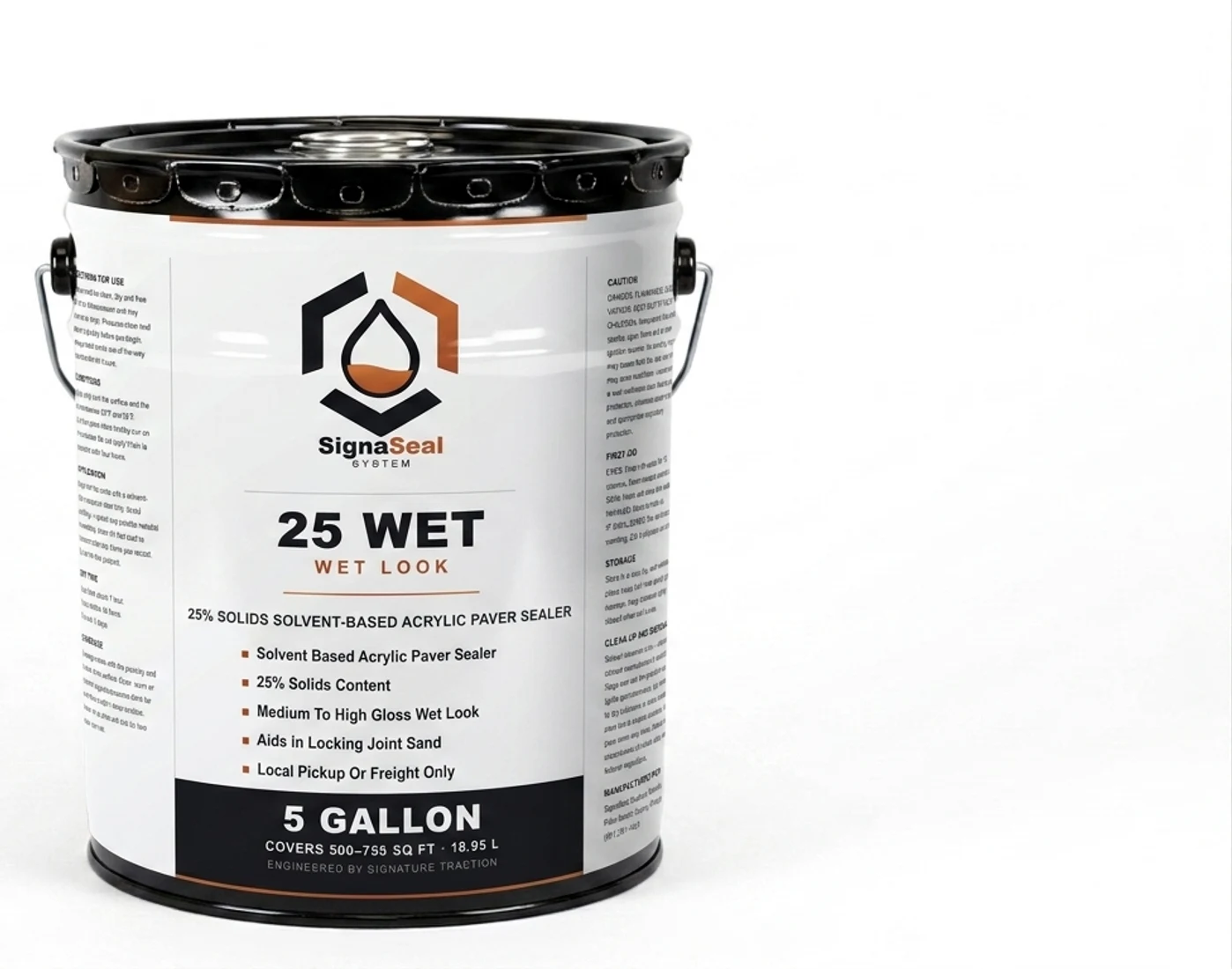
Step Two · Alternative
Same 25% solids, high-gloss finish. The full just-rained-on look, and it locks the joint sand down. This is the dramatic one, and what we run on most customers' driveways.
Solvent-based — local pickup or freight only. Solvent sealers are classed as flammable for transport, so we can't put a single pail on a regular truck. That's transport law, not a sales tactic.
You bought a sealer that promised 1,500 square feet. You ran out three-quarters of the way down the driveway and figured you'd done something wrong. You hadn't. The label did.
| Surface | Real coverage / gal |
|---|---|
| Smooth troweled concrete | 300 sq ft |
| Stamped / broom swept | 200 sq ft |
| Pavers & exposed aggregate | 100 sq ft |
| What the marketing claims | 250–300 sq ft |
Pavers are thirsty. Published industry coverage for pavers and exposed aggregate is about 100 square feet per gallon — and the first coat is a flood coat that soaks down into the joint sand and drinks a big share of the pail before it ever coats a stone.
This is the first production run of SignaSeal 25 and we're not pretending otherwise. Here's exactly how it goes, start to finish.
No card, no charge, no obligation. You're holding one of 40 places in the first run at founder pricing — $199 a pail, which holds until this run sells out and covers your first order.
Once the batch fills, production is locked with our manufacturer and we email you the exact ship date — along with a payment link. That's the first time money is mentioned.
Happy with the date? Pay and you're in. Changed your mind? Ignore the email. Nothing was taken and nothing is owed.
Straight from the plant, ground freight, roughly 3–4 weeks from confirmation. Application guide and walkthrough video come with it.
That's the only thing we ask. Your driveway is how the next person decides.
No stock photography, no supplier catalogue shots. These are South Florida driveways we sealed ourselves, with the product this kit is built from.
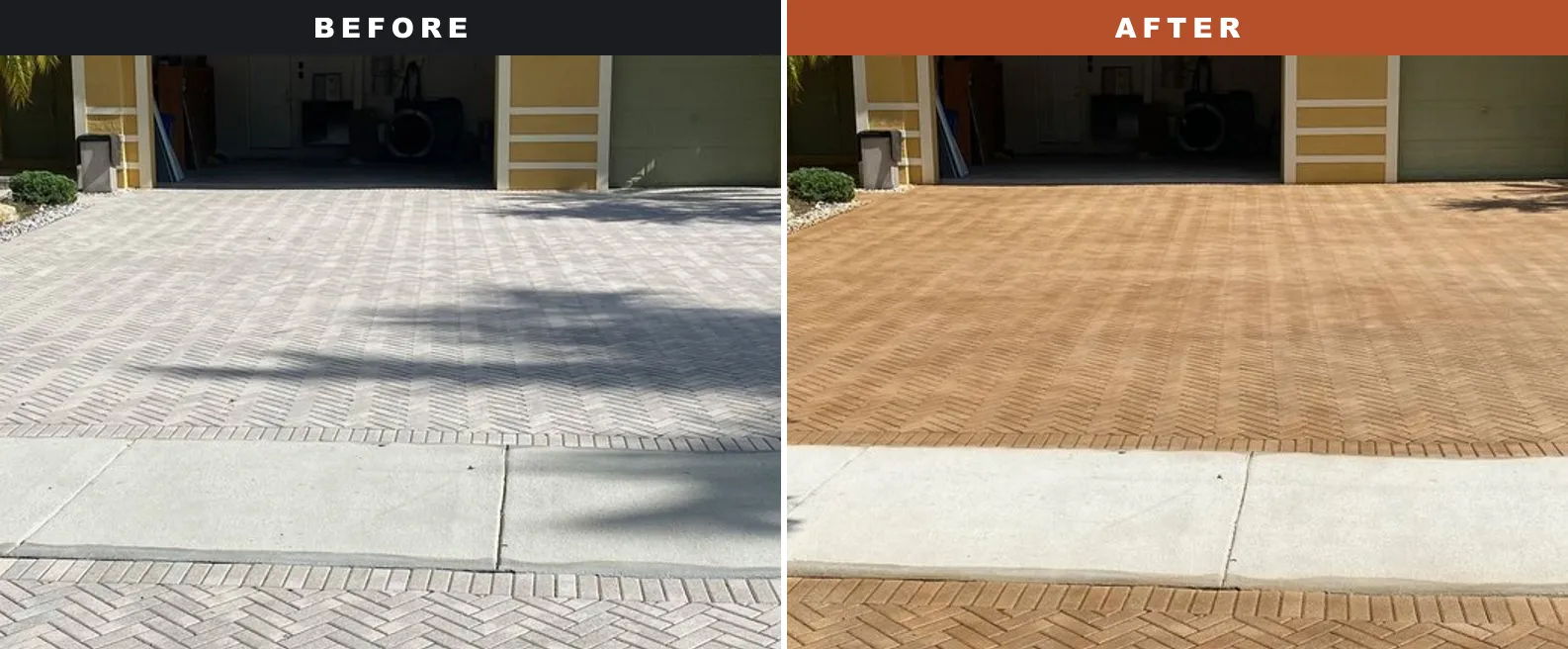
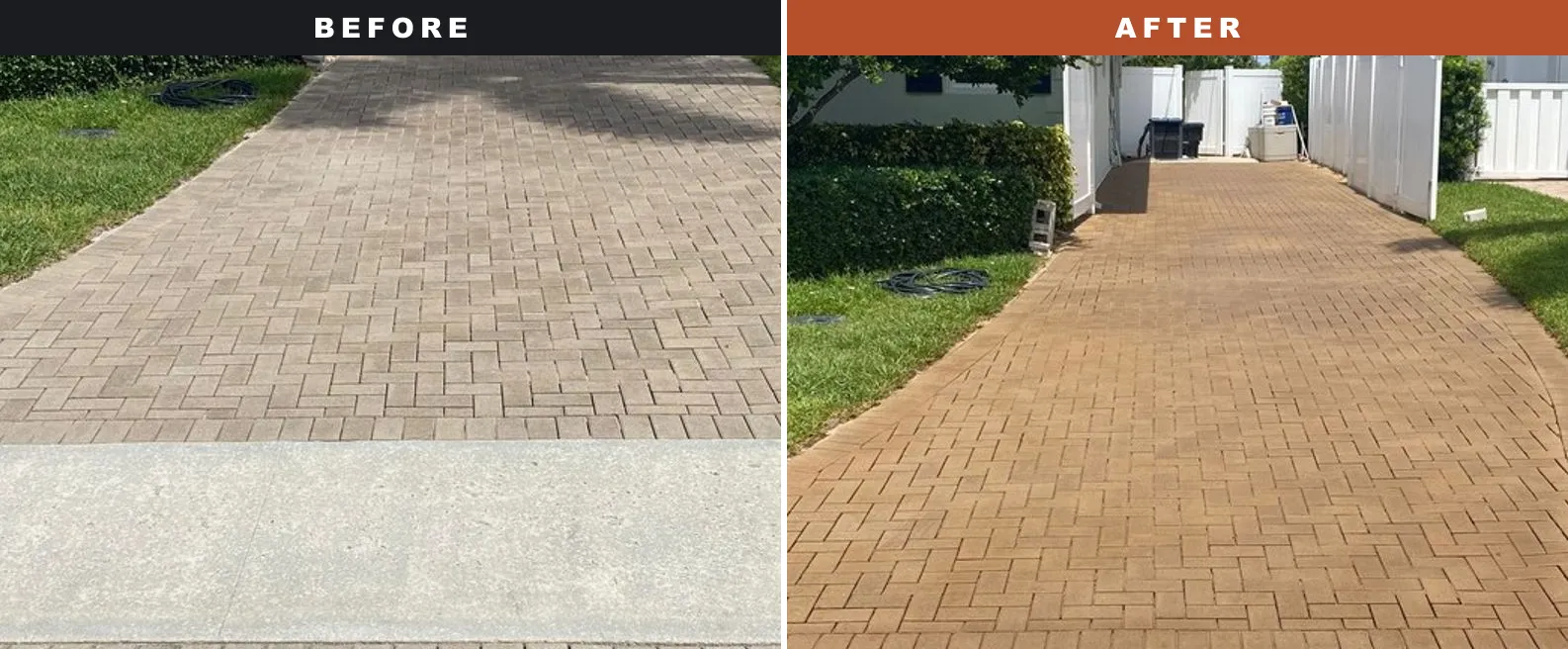
Sixteen seconds: faded, enhanced, and the product that did it.
Going down on a faded driveway — real job, real time, standard spray equipment.
500 to 750 square feet, two coats, done properly. Published industry coverage for pavers and exposed aggregate is about 100 sq ft per gallon, and the first coat is a flood coat that soaks into the joint sand and drinks a large share of the pail. If a label tells you 1,500 sq ft, it's describing one thin coat that will fail inside a year.
25% solids — the amount of actual sealer left on your pavers once the water evaporates. Most water-based paver sealers on the market are 15–18%. In Florida exposure testing, 25% products held their colour and sheen through two rainy seasons while 15–18% products lost sheen by month six. More solids means a thicker, tougher film and a longer life.
You can use the topcoat on its own and it'll look good — plenty of people do. But DEEP is what actually waterproofs the paver, because it soaks in and bonds inside the pore instead of sitting on top. Put it down first and the topcoat goes on evenly instead of being drunk unevenly by a thirsty surface, and the whole thing lasts longer. If your budget only stretches to one pail, buy the topcoat. If you want the job to still look right in year four, buy both.
If you want richer colour without shine, pick Natural — it's the water-based satin, and it's the one that can ship to any address in the country. If you want that just-rained-on gloss and you can collect locally or take a freight delivery, pick Wet. Both are 25% solids and non-yellowing; the finish and the shipping are the only real differences. Solvent-based sealers are classed as flammable for transport, which is why Wet can't go out as a single parcel — that's transport law, not a sales tactic.
No. A standard pump sprayer works — the kind any hardware store sells for around a hundred dollars. Two thin coats beat one thick coat every single time; one heavy coat skins over on top and fails early. Application instructions and a walkthrough video come with every pail.
Brick pavers, concrete, and decorative or stamped concrete. Not natural stone — granite, marble and travertine won't take this kind of product, and we'll tell you that straight rather than sell you something that can't work on your surface.
Walk on it in about an hour. Drive on it at 48 hours — always. Not 24. A full cure needs a full bake, and Florida clouds and rain don't get a discount. We'd rather you wait a day longer than mark a driveway you just paid to make beautiful.
Because we're not a chemical company that's never held a wand. We seal driveways for a living in South Florida, and we got tired of paying $300 a pail for product we could specify better ourselves. Every photo on this page is our own work. The product itself is made to our specification by an established American coatings manufacturer — we're not mixing it in a shed.
If you're in South Florida, we'll do it. Our enhancement service goes further than the sealer alone — we colour-match faded pavers back toward their original tone, which is a craft rather than a product. Start at the SignaSeal service page.
No card, no charge, no obligation. We'll email you the ship date and a payment link once the run is confirmed — and you decide then.